
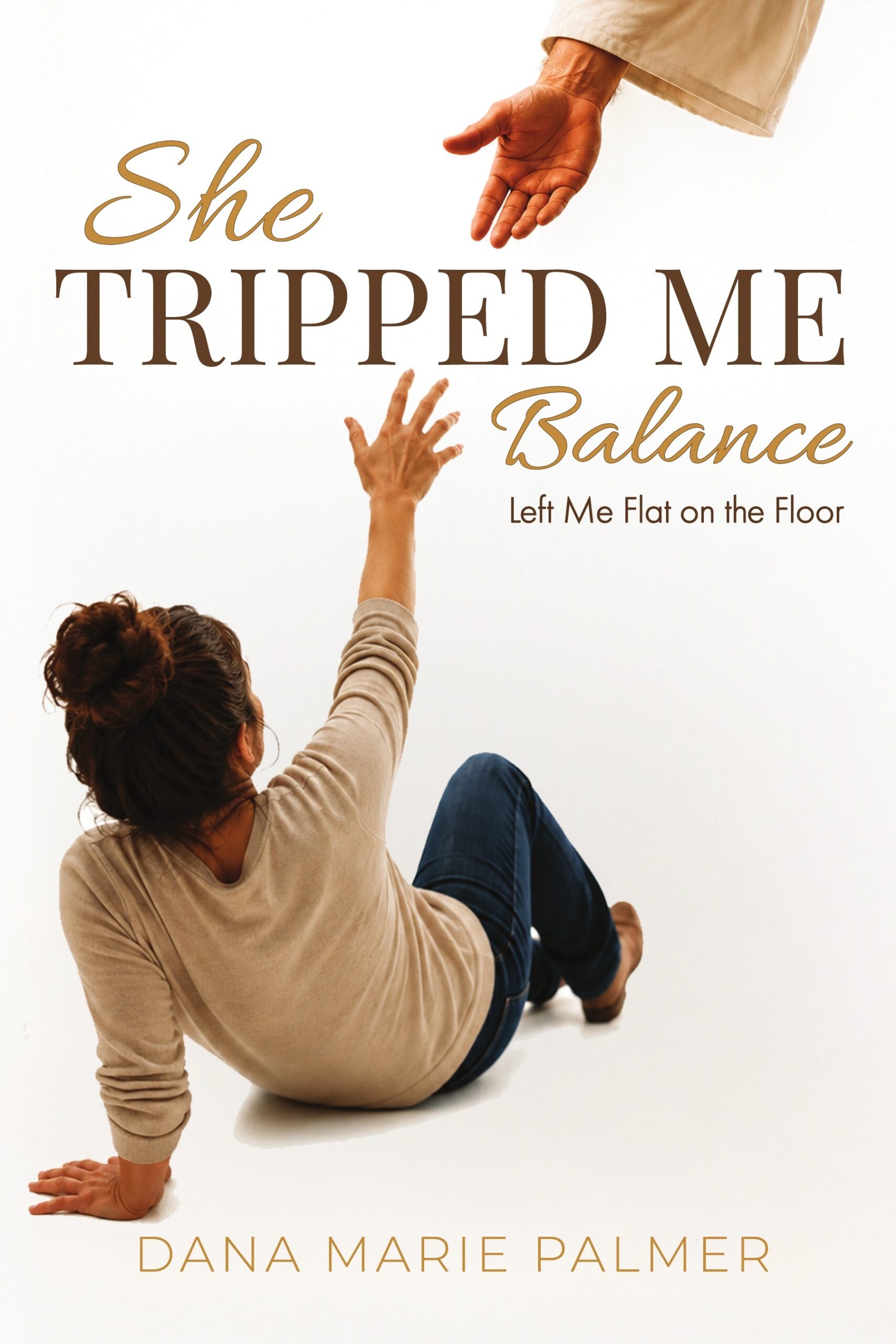
For the woman who is faithful and exhausted at the same time.
Here is Chapter One. My beginning.
MOVEMENT ONE
CHAOS
When thou passest through the waters, I will be with thee.
— Isaiah 43:2
BORN INTO IT
In Greek mythology, Chaos was the very first of all — the origin of everything. Not a gaping void, but a shadowy realm of mass and energy, personified as female, from which everything powerful in the world would eventually emerge.
I am the sixth child in a family of all girls. I was born into chaos.
I was raised at 5136 Zakon Road, Torrance, California. This was the same house my parents bought a couple years after they were married. One of many thrown up for veterans coming home from World War II. Mom always said she didn’t like the house much when they bought it and had expected to just sell it in a couple years and move on. That was not to be the case.
The Zakon house was a tiny home when they purchased it, about 800 square feet. As the family grew, the house needed to as well. It just kept going through many stages of remodeling. By the time I was born, the garage was being used as my parents’ bedroom, complete with the garage door still intact. Dad had added an entire wing behind the kitchen, complete with a second bath. The house was a whopping 1,100 square feet when it was sold in 1980 — garage having reverted to its original purpose. As per the era and area, the living room had a wall heater. No forced air heating. No air conditioner. Not even a fireplace.
My mother was already forty-one years old when she had me and went back to work full-time when I was two. She was present in our home and absent from it at the same time. When Mom was home in the evening or had a stray hour to herself on a weekend, she did not so much relax as disappear, not out the door, but down into the pages of a book. I can still see her precisely — tucked into her favorite brown chair, legs curled up beneath her, gone somewhere I was not invited to follow. I would come to her with a question, or with nothing but the simple wish to be seen, and the answer was nearly always the same. “I’m reading.”
After enough of those, I quit interrupting. But something in me hardened around the whole idea of reading. In the sixth grade they gave us the standardized tests, and I was told I read at a college level. I could read perfectly well. I simply hated it, and I went on hating it for years, reading only the bare minimum anyone made me. I couldn’t have explained it then, but I think I can now — the book was the thing that had her, and what I wanted, more than anything, was to be the thing that had her instead.
I have come to believe that a child who hears “I’m reading” enough times learns a quiet and dangerous lesson — that attention is something you earn, and that to be chosen you must first make yourself impossible to overlook. What I eventually did with that lesson is a later part of this story. For now it is enough to say that the brown chair was teaching me something long before I understood the lesson.
If my mother was present and absent at the same time, my father was a different kind of riddle. He was not a warm man — and I want to say that plainly before I tell you the sweet part, because the sweet part only means something against the rest of him. He had a way of teasing his girls that drew blood. His favorite move was to call out, “Who wants ice cream?” and when we’d all jumped and screamed yes, he’d say, “You get none,” laugh, and walk out of the kitchen. My sisters dreaded it.
And yet.
The first vivid memory I possess is a sweet one, literally. When I was a toddler, my mother worked days and my father worked nights, and with my sisters already in school, it was just me and Dad for a few hours every afternoon. I’d toddle out the front door in nothing but my sister Melissa’s underwear because Dad wasn’t picky about whose clothes I wore. I found only his legs sticking out from under the Oldsmobile, and I yelled, at the top of my two-year-old lungs, the most powerful word I knew.
“POPPINCANNY??”
It was my own word, one long slurred run at three real ones: pop, and, candy. Dad asked me every day if I was ready to go get some, and since I was too young for school, I got to go every time. He let me pick any treat I wanted from the rack by the register — anything but the candy cigarettes, which made Mom mad. Mostly I picked a 3 Musketeers.
Here is what I didn’t understand until I was grown. My father made me three promises, and he kept every one: a candy bar every day, an ice cream cone every week, Disneyland every year. He was not warm. But he was faithful in the three promises. Even at sixteen I’d still ask him, in the only word that ever fit, “Poppincanny?”
I had no language yet for what that was teaching me. I only knew that in a house where nothing had a place and nothing stayed put, there was one thing I could count on like the sunrise — when I called, he came.
My parents always had an open-door policy, or rather a revolving door policy. There constantly seemed to be someone who needed a place to stay, and our home was it. In my mind, this revolving door just kept spinning with the ins and outs of cousins, aunts, uncles, ex-uncles, friends, wayward teens, and the like. Few, if any, were ever refused refuge under our roof. Looking back, I am horrified by how dangerous this was for us girls, but that is what my parents did, and I knew no other way of life.
Add to all of this that my mother was a working woman, which didn’t leave much time for keeping house. I was the baby and was not made to do chores. My older sisters were pre-teens and all that entails. Suffice it to say I was not raised in a neat and orderly home. That, in and of itself, was a breeding ground for a chaotic mind.
Though my mother was organized at her work, these skills were not demonstrated or mentored in my home. Along with my mother and us girls not keeping the inside clean and tidy, my father lived as if our home were a junkyard. His projects and subsequent tools for such were strewn everywhere about the place. The old adage “A place for everything, and everything in its place” was not practiced in our home.
Mom and Dad were both of the World War II generation that lived through the Great Depression when you saved everything even if it was broken. You might need a part from that object in the years to come. My parents were not extreme hoarders; however, they definitely fell somewhere on the hoarder spectrum.
As an adult, I learned that both my parents had been abused as children. So when I tell you they loved me the best they knew how, I mean it.
On cold mornings, before anyone else was stirring, I taught myself to strike a match, light the pilot on the wall heater in the living room and lie down on the floor in front of it. I would stay there for what felt like hours, face warm, the rest of the house still dim and quiet around me. I didn’t think of it as being alone. It was just morning. It was just what I did.
That is the thing about chaos: when you are born into it, it doesn’t announce itself. It has no contrast. You cannot see the water you are swimming in.
The Zakon house had a wall phone in the kitchen with a long extension cord. Over the years, family members had scratched phone numbers directly onto the wallpaper next to it — numbers written in whoever’s handwriting, in whatever pen was nearby, layered over each other until the wallpaper itself had been worn away in patches. By the time we moved, there was no paper left in that spot. Just wall. Just marks.
I have thought about that wall many times since. It was a perfect picture of how we lived. Nothing had a place. Everything just landed where it landed and stayed there long enough to become permanent. Not out of neglect exactly. Just out of a house that was always too full, always moving too fast, always one more person and one more problem ahead of whatever system might have held it together.
I didn’t know it was chaos. I thought it was Tuesday.
The six of us Leonard Girls had eighteen years between the oldest and youngest. Penny Louise was born first, then Rebecca Jo, Melissa Ann, Stacy Lynn, Kelly Jean, and me.
Penny married when I was eighteen months. She told me that the day Mom announced she was pregnant with me, she checked out. If she was going to raise another kid, it would be her own. Penny took the first offramp out of chaos — his name was Jim. After that, Mom had to pay her to babysit me.
By the time I was old enough to notice what was happening around me, my other sisters had their own dramas, their own friends permanently camped on the couch, their own noise filling every corner.
Rebecca took the married route early as well. Melissa was nine when I was born and, from the stories, if I was already asleep when she went to bed, she would come get me and tuck me in with her. I can still hear Stacy’s childhood laugh in my memories — infectious, the kind that makes you want to laugh right along with her. Kelly was my closest companion in age, the one who was there during my middle school years, the one I shared music with, the one I eventually shared an apartment with when we were both adults trying to find our footing.
There was one more. My cousin Paula, my mother’s sister’s girl, came to us at sixteen, a few years before her own mother died. She fell between Rebecca and Melissa in age, and that is about where she settled in the family, as though the birth order had left a space and waited for her to fill it. She stayed through high school, then left the way we all eventually did — in her case, for the military. She was never a houseguest. She was a sister the house made room for.
Six girls. Two parents. A long stream of temporary housemates. One house that kept expanding just to hold us. No privacy, no order, no system that lasted longer than a good intention. We sisters loved each other fiercely and lived together loudly, and nobody ever stopped to ask whether any of us were learning how to run a home. We weren’t.
Nobody taught me to clean. Nobody taught me to organize. Nobody handed me the map. I would spend years as a grown woman, a wife and then a mother, trying to teach myself what the Zakon house never did. You cannot outlearn a childhood overnight. And I didn’t realize I should have set it down. I carried it with me long after I left Zakon Road. Not in my suitcase. In my nervous system. In the part of me that always felt one step behind, always slightly braced, always waiting for the next thing to land and stay. For most of my life, I was certain it meant something was wrong with me.
In Greek mythology, Chaos was not the end of creation. It was the beginning. From that dark and formless space came everything powerful that followed. It was a natural state of the universe, impersonal and inevitable. It can also be the natural state of a home. But this kind of chaos settles differently inside a child, and 5136 Zakon Road had its own unique kind of chaos. It became the noise in my mind, the urgency in my body, the motion without direction. I thought escape meant running from where I came. Chaos has a way of staying with you when you mistake it for an identity. I spent decades trying to outrun the chaos of my childhood.
The chaos that consumed me wasn’t a character flaw — it was an inheritance.
COMING November 7th